A dive into Bat out of Hell, the 2017 musical

Ania Z, a 10a B


The Lost: An anomaly in the DNA stops the aging of said person. Activates when they turn 18.

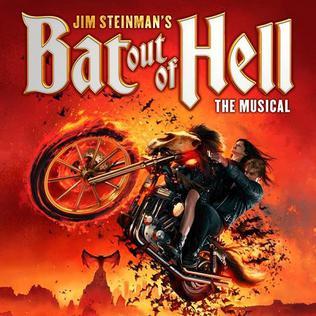
“Like a bat out of hell I’ll be gone when the morning comes” […] “But when the day is done … then like a sinner before the gates of heaven I’ll come crawling back to you.” The musical, featuring songs by Meatloaf (ex. “I would do anything for love”), captures the attention of the masses with a Romeo and Juliet type romance between the daughter of a very influential corporate manager and the leader of The Lost. The hurried consumption of love between them (since their age will forbid anything more) gradually reveals the polarization of this almost dystopian society, along with different background stories of secondary characters which also add an emotional dimension to an otherwise philosophical debate. In this review I will focus on the themes and the discussion that follows the narrative, not on the story in itself.

The two polarized world views are well defined, although extremely exaggerated. The Lost are a play on the concept of rebellion, of immaturity and of youth. They exist beyond time (“Don’t worry about the future, sooner or later it’s the past”) which justifies the conditions of their living. A reoccurring idea is that they are wasted youth: potential with too much freedom, kids who live only for themselves and for pleasure (“I’m an impressionable child in a tumultuous world and they say I’m at a difficult stage”). This ideology that combines hedonism and cynicism is very excessive, and they end up living their whole lives as 18-year-olds who are completely segregated from reality (“As far as I’m concerned the world could still be flat.”). The other side is the corporatist, serious “old age”, who’s aim is to eradicate these kids who lack discipline and perspective. Even though this is an outlook that most of us have (this view of being intentional with our lives, especially our future, of existing between other people and transacting with them), it is portrayed as very dark and absurd. The thing that antagonizes this side to such an extent is their constant trying to eradicate the youth, of killing the Lost and discontinuing every form of pleasure that might make someone rebel (in this case, especially music).

It’s hard to assume that what was being said was that committing to a corporatist life will be a waste of your personal life, and it’s much more likely that the musical tries to show two things. The first is this fight inside every one of us of what our meaning of life is, and what our obligations to life are. The second is this great fear that youth deals with (of growing up), but in this scenario that fear is forever prolonged since they are physically incapable of growing up. They make it pretty clear that, to them, “A wasted youth is better by far than a wise and corrupted old age”. At the same time, the corporate side also shows their own fears in the interactions with the Lost. To them, the idea of people living all their life as kids, without having to sacrifice what they sacrificed, seems unfair and makes them wonder about their own lives too much. This fight is interesting because in real situations, adults can never go back to whatever youth was, but youth have no choice but to move forward towards adulthood. In this case though, both sides are stuck in their current state and there is no more room for empathy, which results in conflict, in people getting hurt and even killed.

The first album (“Bat out of hell I”) came out in 1977 and was meant for another musical, called Neverland. Through this, the resemblances between Peter Pan and Bat out of hell become more apparent. In both, the two sides are stuck in their world view. Again, in reality this is different, reality leaves room for compassion and understanding, because common points are highlighted, as opposed to these worlds, where there’s no similarities between the two sides. From this we can deduce that, at least in the authors point of view, for us to care enough not to antagonize other perspectives, we must have some link between us and them. The moment that disappears, “that” in this case being time, there is nothing stopping both sides from considering each other evil, corrupt, dangerous, etc. This is something that applies to modern problems as well. Especially in politics, a reoccurring theme is finding horrendous labels for the other side, even though reality is far from those beliefs. All this does is make it easier for one side to hate the other to the point of conflict, instead of working together towards merging ideas and finding solutions.

This just goes to show how much time matters, not just in the fact that we move through it, but because it dictates our priorities. A person who has a limited life spam (and who puts all their time and effort into reminding himself of this) will have to have more principles and a better morality, since limited time results in communities forming, and communities need common goals, common economies, common values, etc. When time isn’t a restraint anymore, what matters is inevitably the present, and the present doesn’t require principles, caring or anything that involves responsibility or that has an effect on the future. Therefore, the Lost and the Corporatists aren’t that different in themselves, but in the context of their living. Obviously the one’s who are going to be more bitter between the two are the Corporatists, who sacrifice so much of themselves because of time and who find it unfair that others don’t have to. The Lost also have their share of envies, mostly the fact that nothing in their life is of value and nothing they are is important to anyone but themselves.

It’s clear that in reality, nobody can live on either side of the argument, and it is only going to hurt you if you attempt to advocate for only one. The perspective we should get out of watching this is most likely that the two worlds overlap in each of us, and that finding the perfect balance where no resentment is built up between them is crucial to living a life you won’t end up regretting.
Envy – a poem

Envy

Alex Jibleanu, a 10a B


Seeing people happy all the time, makes me jealous,

My heart beating less, makes me a little careless,

About stuff that’s going on, seeing love on social feed,

As my heart starts to care, even though I don’t wanna care a bit,

Burning in my emotions, feeling only anger and a lot more envy,

Thought I would find true love around nineteen or twenty,

Looking at people being with other people, smiling much,

Then there’s me, alone at a table enjoying my new lunch,

Kinda see if I will I get there, holding someone in my hands,

To cook for someone, to hold them or even think of some plans,

Getting attached too quickly, getting real hurt by them after,

While they’re seeing me alone at a table, dying of laughter,

Writing all my emotions stopped to work, when love arrived,

Want back the ”heartless” me, but I really wished he survived,

”Tell me how you are?”, ”Tell me how you doing’ ‘How you are?”

Me just being a little down, sad I don’t hit some girls bar,

You know, I am under every girls’ expectations, below limits,

Instead, I take some of my time, to put to their own minutes,

They don’t know every mean thing they say kinda does, you know, hurt?

While you try to detach yourself from them, they again pull you and start to flirt,

Starting to think that this ”love” thing is really something not for me,

I don’t know, it’s something that only I can’t actually see,

Closing my eyes, relaxing on my bed as I start falling in an endless abyss,

Falling through my memories, my problems, thinking who I ought to miss,

Thinking of my parents, my dad, my mom, even my little sister,

Thinking of all my ex’s, even my newest crush, will I miss her?

Seeing only darkness as the cold around me was hugging me tight,

Never got a hug from someone else, this actually feels alright,

I embrace the feeling of no one around, of being forever alone,

At least my heart and soul are still here; I only cracked a bone.

Have you seen Sweeney Todd, the iconic Tim Burton slasher musical?

Pasa Sarah, a 10a A

The film that I’m going to write a review about is Tim Burton’s Sweeney Todd: The Demon Barber of Fleet Street, which is a film that takes place in Victorian London, where the barber Benjamin Barker is married to the gorgeous Lucy and has a lovely daughter with her, called Johanna.

The beauty of Lucy attracts the attention of the corrupt Judge Turpin, who falsely accuses the barber of a crime that he did not commit and abuses Lucy later after gaining custody of their daughter.

After fifteen years in exile, Benjamin returns to London under the new identity of Sweeney Todd, seeking revenge against Turpin. He meets the widow Mrs. Lovett, the owner of a meat pie shop who tells him that Lucy swallowed arsenic many years ago and that Turpin assigned himself tutor of Johanna.

He opens a barber shop above her store, but what no one knows is the fact that barber shop is a cover where a series of crimes take place.

In my opinion the movie is a brilliant mix of beauty and horror.

The musical won the Tony Award for Best Musical and Olivier Award for Best New Musical.

This movie isn’t made for the week hearted: it is considered to be the bloodiest musical in stage history! Being the bloodiest musical in cinematography so far, it isn’t exactly a jolly romp either, but a dark revenge tragedy filled with heartbreak.

In my opinion the movie is a masterpiece and everybody should give it a try.

Romanian myths and legends you forgot about that every Romanian should know

Pasa Sarah, a 10a A

The Solomonar

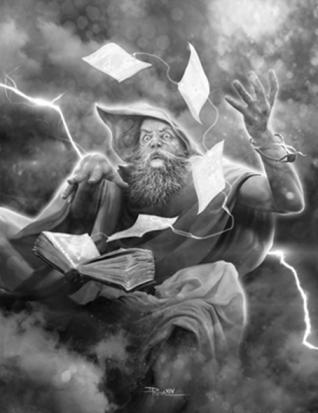
Sometimes good, sometimes a bit wicked, the Solomonar is considered the great sorcerer of storms and winds, master of all lakes, tall mountains and deep caves, and the creator of frost, mist, and hail.

People who claim to have seen them say that they are tall, red-haired, dressed in a white long coat. He is always described as carrying his Magic Book, the source of all his powers. Along with his book, he also carries a piece of wood for calling the winds and an iron axe which he uses to create hail.

They are generally considered good wizards and often presented as false beggars, testing the kindness of people. If people refuse to help them while they are in disguise, they bring hail and strong storms to ruin the crops, but if they are helped, they offer gifts to the rivers.


Jidovi – The Carpathian Giants

The Romanian Giants known as Jidovi, are probably one of the most beloved folklore creatures.

Jidovi are described in Romanian legends as kind and patient, walking with huge steps from one hill to another. Their presence in Romania is well maintained by the multitude of places that were named after them: the Jidovi table, the Jidovi cave, the hill or the tombs of Jidovi, and, of course, Jidovina.

In the Carpathians, Jidovi are often also called Blajini, which means the Kind Ones, or Novaci, which means the Powerful Ones, as they could snatch a tree without any effort. They lived in caves and thick woods.

The best legend of them is that of the famous agreement between the great Dacian king Burebista and all the Jidovi from the mountains. They were allowed to live in the mountains only if they promised to guard the great Dacian gold treasures with their life.

Interestingly enough, it is believed that, in the deepest caves of the Carpathians Mountains, you might still find Jidovi, protecting the treasures for generations to come.

Baba Dochia

Some historical legends describe Dochia as the beautiful daughter of Decebal, the king of the brave Dacians – the Romanian’s ancestors. It is said that, after being defeated by the Romans, the Dacians tried to escape by hiding in the thick forests of the Carpathians. Decebal, seeing his army defeated, preferred committing suicide over being captured and mocked by the Romans.

Dochia tried to escape, but the Emperor Traian ordered his best soldiers to capture the beautiful girl, whose eyes bewitched him deeply. Proud and brave, Dochia ran as fast as she could. For her, there wasn’t a greater shame than being captured by the romans and forced to marry Traian.

When Dochia saw she was on the edge of being caught, she climbed on a steep rock and threw herself.

Even today, that mountain rock wears the Dacian princess’ name and tourists can admire it on their way to Ceahlau Peak.

But the most famous legends of Dochia are those connected with the arrival of spring. There are many versions of this story spread all over Romania but, despite the different regional adjustments, the core is the same.

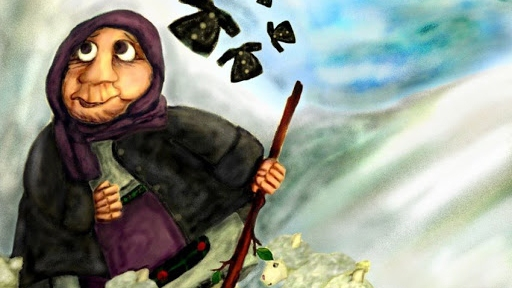
Thus, it is said that once upon a time, there was an old lady named Baba Dochia. She had a son, Dragobete, a very handsome and kind boy who fell in love with a girl.

Their love was so powerful that they got married immediately and only after did they tell the news to Baba Dochia. She got madly furious and decided to teach her daughter in law a lesson.

Thus, on a cold winter day, Baba Dochia gave the girl a ball of black wool and asked her to go to the river to wash the wool until it turns white, threatening her not to return until the job was done. The young girl realized that whitening the wool was an impossible task, but still she went to the river, praying for a miracle to happen. Her love for Dragobete was truly sincere and the thought of never seeing him was so unbearable that she began washing the wool in the frozen waters of the river.

Her delicate hands rapidly began to bleed, but even so the wool remained black. To her utter amazement, a strange man appeared and, touched by the girl’s grief, gave her a beautiful red flower, saying that if she puts it into the water, the wool will turn white. The girl was doubtful at first, but, seeing that there was no other hope left, she lowered the flower into the water. As if by magic, the charcoal wool turned white right before her eyes, and she quickly returned home to her love. Baba Dochia, as expected, wasn’t too happy with her arrival.

While inspecting the young girl, Baba Dochia noticed the red flower pinned to her blouse and, believing that spring had come, hurried to take her sheep up the mountains.

She dressed herself in twelve coats, but, as she climbed the chilly mountains, the weather started getting warmer and warmer with each day, and so, with each day, she took one coat off, until she remained in only a blouse. As if on que, the following day a freezing storm came with the last push of winter, and Baba Dochia, as well as her sheep, froze on the mountains and turned into stone by the next day.

Primul telefon mobil

Primul telefon mobil

Clasa a IV a A

După cum știți, toate lucrurile de pe pământ au o istorie. Această istorie se regăsește și în cazul primului telefon mobil. Dacă v-am făcut curioși, citiți în continuare!


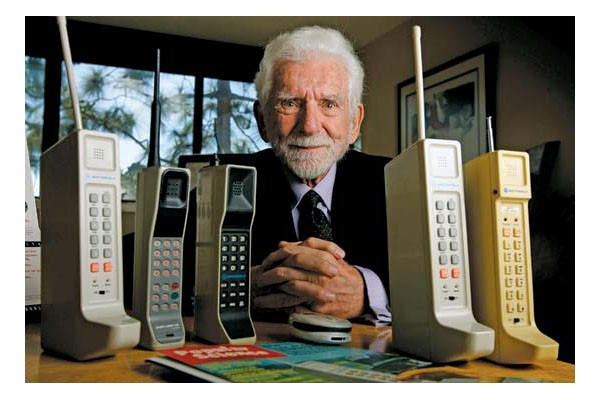
Telefonul mobil a fost inventat în anul 1973 de către Martin Cooper.

Telefonul avea o greutate de 1.3kg și o rază de acțiune de cca. 20-30km.

Telefonul a fost creat de compania MOTOROLA.

Martin Cooper a fost inventator și antreprenor executiv.

El s-a născut pe data de 26 decembrie 1928, în Chicago, SUA. A luat Premiul Marconi în anul 2013, pentru că a inventat un obiect care a ajutat la evoluția omenirii.

Vă puteți imagina măcar cum e să cărați un fel de cărămidă uriașă, care are greutatea unui bebeluș?!!

La începutul anului 2000, Ericsson Mobile Communications a lansat Ericsson R380, primul dispozitiv comercializat sub denumirea de smartphone.

Sistemul  de operare pe care l-au utilizat a fost folosit la telefoanele inteligente și în următorii 10 ani.

Un an mai târziu, în anul 2001, compania canadiană RIM a lansat pe piață modelul BlackBery, un smartphone care a permis pentru prima dată și transmiterea e-mailurilor, prin rețeaua GSM.

.

Era un dispozitiv utilizat de oamenii de afaceri.

Adevărata revoluție a fost în anul 2007, când Steve Jobs, fondatorul companii de telefoane Apple INC, și echipa sa au lansat seria de telefoane Iphone, cu ecran mare, cu interfață touchscreen, și tastatură ecranizată.

Spre deosebire de telefoanele anterioare, softul era foarte performant și meniul foarte “prietenos”, ușor de folosit.

În timp, tehnologia a evoluat foarte mult.

De la an la an, telefoanele mobile au devenit mai ușoare, mai performante. Marile companii de pe piață s-au întrecut în a descoperii cele mai grozave tehnologii, cele mai ingenioase aparate.

Tehnologia are multe aspecte pozitive, dar trebuie consumată cu moderație.

Suntem de părere că telefonul mobil este important in viața omului, dar, folosit excesiv, poate crea dependență și ne poate afecta sănătatea.

Propunem ca, în fiecare zi, măcar jumătate din timpul pierdut pe telefon să fie folosit pentru a citi, pentru a face activități în aer liber sau pentru a socializa cu prietenii.

Pentru că „life was much easier when Apple and Blackberry were just fruits”! ?

Aerogelul

Milena C, Sophie C, Ruxandra D, Alexia T, Alec Z (clasa a VI-a)

Aerogelul se folosește pentru termoizolare și pentru prinderea particulelor spațiale care merg cu viteze foarte mari. A fost folosit în misiuni spre Marte. Se poate folosi pentru impermeabilizare. Dar ce este aerogelul și de ce este atât de important?

Aerogelul este cel mai puțin dens material existent, nefiind nici lichid nici gaz, dar un material între cele două stări de agregare. Densitatea sa este de 800 de ori mai mică decât cea a unei bucăți de sticlă de aceeași mărime. Este de două ori mai dens decât aerul. Există mai multe feluri de areogel. Spre exemplu, există aerogel făcut din CO2 (dioxid de carbon) și aerogel făcut din SiO2 (dioxid de siliciu).

Este obținut prin uscarea în condiții supracritice a unui fluid care este într-un gel. Astfel, rămâne partea solidă a gelului intactă, iar partea lichidă e înlocuită cu gaz.

A fost descoperit în 1931 de chimistul american Steven S. Kistler, când un alt chimist care îi era coleg, Charles Learned, i-a propus un pariu. Cel care reușea să preia aer dintr-un gel, făra a schimba structura solidă câștiga pariul. Steven Kistler a câștigat pariul, astfel inventând aerogelul.

NASA folosește aerogelul pentru izolare termică a costumelor astronauților, însă aerogelul a început să fie folosit și în anumite produse uzuale, precum cosmetice, vopsele, chiar și covoare. Cercetătorii au descoperit că poate fi folosit și pentru fabricarea unor rachete de tennis. Experții spun că aplicațiile aerogelului sunt aproape infinite.

Aerogelurile sunt folosite ca izolatoare termice pentru unele case. Majoritatea aerogelurilor nu poluează (precum aerogelul de silică), nefiind toxice. Alte aerogeluri sunt mai toxice, în cazul în care au fost adăugate alte substanțe în timpul preparării aerogelului. Aerogelul este mai apt ca izolator termic pentru case decât alte izolatoare termice tradiționale.

În concluzie, aerogelul poate fi folosit în foarte multe situații, de la misiuni pe Marte până la case, având un potențial aproape nelimitat.

Aerogel

Aerogelul acționează ca un izolator termic, protejând floarea.


Top 5 Netflix series you need to watch

  1. The Flash

Young Barry Allen’s life stopped the minute his mother was murdered. The true killer never found, its mystery obsessed Barry, driving him to become a forensic scientist. Consumed by his work, he spent his life chained to his desk, solving every case that flew across it. But when a freak lightning bolt hits a nearby shelf in his lab, Barry receives super-speed, becoming the Flash. Now, he’ll race up buildings, across oceans, and around the world to get his man—while getting introduced to a world so much bigger than his old life of microscopes and cold cases.

Able to run at near light-speeds, his powers provide the ultimate caffeine kick: He can run up buildings, move so swiftly he phases through objects, create sonic booms with the snap of his fingers—and never need to order delivery. Despite his speed, Barry can become so obsessed with crime-solving he can still lose track of everything else around him, leaving the fastest man alive constantly running a minute behind.

  1. Riverdale

As a new school year begins, the town of Riverdale is reeling from the recent, tragic death of high school golden boy Jason Blossom – and nothing feels the same… Archie Andrews (KJ Apa) is still the all-American teen, but the summer’s events made him realize that he wants to pursue a career in music – not follow in his dad’s footsteps – despite the sudden end of his forbidden relationship with Riverdale’s young music teacher, Ms. Grundy (Sarah Habel). Which means Archie doesn’t have anyone who will mentor him – certainly not singer Josie McCoy (Ashleigh Murray), who is only focused on her band, the soon-to-be-world-famous Pussycats.

It’s all weighing heavily on Archie’s mind – as is his fractured friendship with budding writer and fellow classmate Jughead Jones (Cole Sprouse). Meanwhile, girl-next-door Betty Cooper (Lili Reinhart) is anxious to see her crush Archie after being away all summer, but she’s not quite ready to reveal her true feelings to him. And Betty’s nerves – which are hardly soothed by her overbearing mother Alice (Madchen Amick) aren’t the only thing holding her back.

When a new student, Veronica Lodge (Camila Mendes), arrives in town from New York with her mother Hermione (Marisol Nichols), there’s an undeniable spark between her and Archie, even though Veronica doesn’t want to risk her new friendship with Betty by making a play for Archie. And then there’s Cheryl Blossom (Madelaine Petsch)… Riverdale’s Queen Bee is happy to stir up trouble amongst Archie, Betty, and Veronica, but Cheryl is keeping secrets of her own. What, exactly, is she hiding about the mysterious death of her twin brother, Jason? Riverdale may look like a quiet, sleepy town, but there are dangers in the shadows…

  1. The good place

From Executive Producer Michael Schur (“Brooklyn Nine-Nine,” “Parks and Recreation” and “Master of None”) comes a smart, unique new comedy about what makes a good person. The show follows Eleanor Shellstrop (Kristen Bell, “House of Lies,” “Veronica Mars”), an ordinary woman who enters the afterlife and, thanks to some kind of error, is sent to the Good Place instead of the Bad Place, which is definitely where she belongs. While hiding in plain sight from Michael (Ted Danson, “CSI,” “Cheers”), the wise architect of the Good Place (who doesn’t know he’s made a mistake), she’s determined to shed her old way of living and discover the awesome (or, at least, the pretty good) person within.

  1. Once upon a time

For Emma Swan, life has been anything but a happy ending. But when she’s reunited with Henry – the son she gave up for adoption ten years ago – on the night of her 28th birthday, everything changes. The now 10-year-old Henry is in desperate need of Emma’s help because he believes from reading a book of fairytales that she’s the daughter of Snow White and Prince Charming – who sent her away from the Enchanted Forest to be protected from a curse that was enacted by the Evil Queen. Emma initially refuses to believe a word of Henry’s story but soon finds that his hometown of Storybrooke, Maine is more than it seems. Because it’s in Storybrooke that all of the classic characters we know are frozen in time with no memories of their former selves – except for the Evil Queen, who is Storybrooke’s mayor and Henry’s adoptive mother Regina Mills. Now, as the epic “Final Battle” for the future of both worlds approaches.

  1. Stranger Things

When Will Byers(Noah Schnapp) suddenly goes missing, the whole town of Hawkins, Indiana turns upside down. Many people are on the search for Will, including his mother Joyce(Winona Ryder), his brother Jonathan(Charlie Heaton), his friends—Mike(Finn Wolfhard, Dustin(Gaten Matarazzo), and Lucas(Caleb McLaughlin)–, the police chief Jim Hopper(David Harbour), and other notable people. But one thing leads to another, creating a supernatural trail. And things get even weirder when a little girl with a shaved head comes into the story.

After the mysterious and sudden vanishing of a young boy, the people of a small town begin to uncover secrets of a government lab, portals to another world, and sinister monsters. The boy’s mother, Joyce, desperately tries to find him, and is convinced he is in grave danger, while the police chief searches for answers. Trying to help find him, the boy’s friends discover a strange little girl, who is on the run from “bad men”.

5 riddles with answers

Questions:

Question 1: There were 2 doors. Behind the 1 door, is hell and behind the other door, is heaven but you don’t know which door will take you to heaven. In front of them, there were 2 brothers, which is guarding the door. One of the brother always lie and the other one always tell the truth. Of course you don’t know who is lying and who is not. You only get 1 question to ask one of them to figure out which door leads to heaven. What question you might ask? Remember you only get to ask 1 question. it means that you can’t ask one question each of them. that will be 2 questions. You only ask 1 question to any of them and no more. How do you do that?


Question 2: Listen closely, for these for riddles are all connected. 1. How do you put a giraffe in the refrigerator? 2. How do you put an elephant in the refrigerator? 3. The lion king is having an animal conference, and all animals attend except one. Which animal does not attend? 4. You are on a stranded island that is inhabited by crocodiles. How do you get across without getting eaten alive?


Question 3: What goes back and forth constantly, but never in a straight line?


Question 4: Mr. Smith has 4 daughters. Each of his daughters has a brother.

How many children does Mr. Smith have?


Question 5: There is an ancient invention still used in some parts of the world today that allows people to see through walls.What is it?


Answers:

Answer 1: Go up to one of the guy and ask this question, ” Hello, which door that your brother will point if I ask him which way is the heaven.” Then take the other door. Don’t enter the door that he was pointing. This question will work for both of them because if you ask this question to the truth guy, he will point the hell because he knows that his brother will point hell and if you asked to the liar, he’ll still point hell because he knows that his brother will point to heaven door, so he lied. That’s why you take the other door.


Answer 2: 1. Open the refrigerator, put in the giraffe, and close the door. This question tests whether you tend to do simple things in an overly complicated way. 2. Did you say, “Open the refrigerator, put in the elephant, and close the refrigerator”? Wrong Answer. Open the refrigerator, take out the giraffe, put in the elephant and close the door. This tests your ability to think through the repercussions of your previous actions. 3. The Elephant. The elephant is in the refrigerator. You just put him in there. This tests your memory. 4. You just jump into the water and swim across to the mainland. Have you not been listening? All the crocodiles are attending the Animal Meeting. This tests whether you learn quickly from your mistakes.


Answer 3: A pendulum.


Answer 4: He has 5 children, ll of the daughters have the same 1 brother.


Answer 5: A window.

History of Tic-Tac-Toe

Tic-tac-toe is a paper-and-pencil game for two players, X and O, who take turns marking the spaces in a 3×3 grid. The player who succeeds in placing three of their marks in a horizontal, vertical, or diagonal row wins the game.

Games played on three-in-a-row boards can be traced back to ancient Egypt, where such game boards have been found on roofing tiles dating from around 1300 BCE.

An early variation of tic-tac-toe was played in the Roman Empire, around the first century BC. It was called Terni lapilli (three pebbles at a time) and instead of having any number of pieces, each player only had three, thus they had to move them around to empty spaces to keep playing. The game’s grid markings have been found chalked all over Rome. Another closely related ancient game is Three Men’s Morris which is also played on a simple grid and requires three pieces in a row to finish, and Picaria, a game of the Puebloans.

The different names of the game are more recent. The first print reference to “noughts and crosses”, the British name, appeared in 1864. In his novel Can You Forgive Her? (1864) Anthony Trollope refers to a clerk playing “tit-tat-toe”. The first print reference to a game called “tick-tack-toe” occurred in 1884, but referred to “a children’s game played on a slate, consisting in trying with the eyes shut to bring the pencil down on one of the numbers of a set, the number hit being scored”. “Tic-tac-toe” may also derive from “tick-tack”, the name of an old version of backgammon first described in 1558. The U.S. renaming of “noughts and crosses” as “tic-tac-toe” occurred in the 20th century.

In 1952, OXO (or Noughts and Crosses), developed by British computer scientist Alexander S. Douglas for the EDSAC computer at the University of Cambridge, became one of the first known video games. The computer player could play perfect games of tic-tac-toe against a human opponent.

In 1975, tic-tac-toe was also used by MIT students to demonstrate the computational power of Tinkertoy elements. The Tinkertoy computer, made out of (almost) only Tinkertoys, is able to play tic-tac-toe perfectly.  It is currently on display at the Museum of Science, Boston.

Top 6 Serial killers

Warning: Some pretty messed up stuff ahead. *~*

  1. The Zodiac Killer

The killer fashioned this name for himself in taunting letters he sent to the Bay Area Press. He left ciphers to be decoded and out of the four he sent, only one was definitely solved. The killer operated in California in the late 1960s and early 1970s. His last letter said: Me- 37 and SFPD (San Francisco Police Dept.)- 0. He claimed to have killed 37 victims but the newspapers confirmed only 7. The case file is still open.


2. Donald Henry Gaskins: The Hitchhikers’ Killer

Gaskins has claimed to have killed between 80 to 90 people by torturing and mutilating them. He started killing in 1969, picking up hitchhikers on the coastal highways of the American South. A criminal associate witnessed him killing two young men and confessed to the police. He was sentenced to death which was later turned to life imprisonment without any parole. Gaskins added another murder to his name and became the only man to have ever killed an inmate on death row.


3. Tsutomu Miyazaki: The Human Dracula

He got more names due to his hideous acts. Some of them were The Otaku Murderer, The Little Girl Murderer or Dracula Miyazaki. The reason for this being that he abducted little girls, killed them and indulged in sexual activities with their corpses. On one occasion, he not only drank the victim’s blood but ate her hand as well. He also preserved body parts as trophies and sent postcards to the families describing the murder. His father committed suicide and Miyazaki was hanged in 2008, aged 45.


4. Ted Bundy: The Crazy Necrophile

Ted Bundy was an American serial killer, kidnapper, rapist, and necrophile. He operated in various states in the USA and confessed to killing 30 women. He revisited crime scenes and indulged in sexual acts with the corpses. Bundy decapitated at least 12 victims and kept their heads as trophies in his apartment. Aged 42, Bundy died on the electric chair in 1989. His own defence attorney said, “Ted was the very definition of heartless evil.”


5. Jack the Ripper aka Whitechapel Murder

The real killers or killer were never identified. The name came into being because the victims had organs missing and judging by procedure the killer seemed to have surgical experience. Jack the Ripper who was later believed to be a single person killed female prostitutes in the slums of London between 1888-91.


6. Luis Garavito: The Beast

Also dubbed by the media as the Le Bestia (The Beast), the Colombian is probably one of the world’s worst serial killers. He confessed to the torture, rape and murder of 147 young boys. But the number is believed to be over 300. He was found guilty on 139 counts, which should amount to 1,853 years in prison. But Columbian law limits it to 30, which is what he was sentenced to in 1999. He may be released earlier for cooperation and good behavior.