Pasa Sarah, a 10a A
The Solomonar
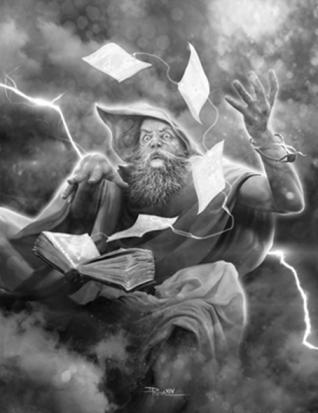
Sometimes good, sometimes a bit wicked, the Solomonar is considered the great sorcerer of storms and winds, master of all lakes, tall mountains and deep caves, and the creator of frost, mist, and hail.
People who claim to have seen them say that they are tall, red-haired, dressed in a white long coat. He is always described as carrying his Magic Book, the source of all his powers. Along with his book, he also carries a piece of wood for calling the winds and an iron axe which he uses to create hail.
They are generally considered good wizards and often presented as false beggars, testing the kindness of people. If people refuse to help them while they are in disguise, they bring hail and strong storms to ruin the crops, but if they are helped, they offer gifts to the rivers.
Jidovi – The Carpathian Giants
The Romanian Giants known as Jidovi, are probably one of the most beloved folklore creatures.
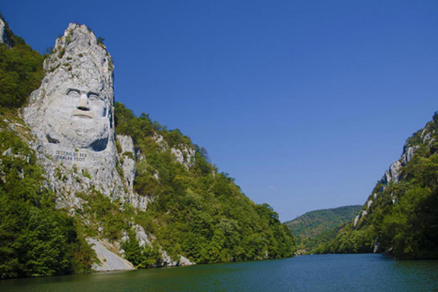
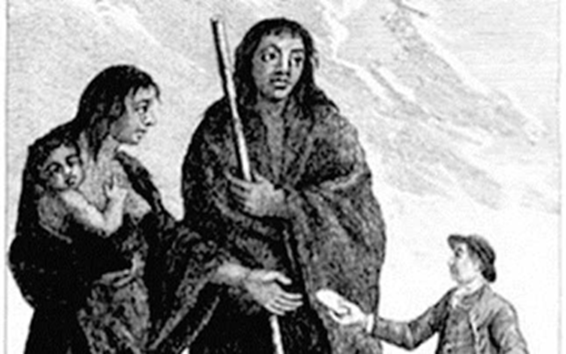
Jidovi are described in Romanian legends as kind and patient, walking with huge steps from one hill to another. Their presence in Romania is well maintained by the multitude of places that were named after them: the Jidovi table, the Jidovi cave, the hill or the tombs of Jidovi, and, of course, Jidovina.
In the Carpathians, Jidovi are often also called Blajini, which means the Kind Ones, or Novaci, which means the Powerful Ones, as they could snatch a tree without any effort. They lived in caves and thick woods.
The best legend of them is that of the famous agreement between the great Dacian king Burebista and all the Jidovi from the mountains. They were allowed to live in the mountains only if they promised to guard the great Dacian gold treasures with their life.
Interestingly enough, it is believed that, in the deepest caves of the Carpathians Mountains, you might still find Jidovi, protecting the treasures for generations to come.
Baba Dochia
Some historical legends describe Dochia as the beautiful daughter of Decebal, the king of the brave Dacians – the Romanian’s ancestors. It is said that, after being defeated by the Romans, the Dacians tried to escape by hiding in the thick forests of the Carpathians. Decebal, seeing his army defeated, preferred committing suicide over being captured and mocked by the Romans.
Dochia tried to escape, but the Emperor Traian ordered his best soldiers to capture the beautiful girl, whose eyes bewitched him deeply. Proud and brave, Dochia ran as fast as she could. For her, there wasn’t a greater shame than being captured by the romans and forced to marry Traian.
When Dochia saw she was on the edge of being caught, she climbed on a steep rock and threw herself.
Even today, that mountain rock wears the Dacian princess’ name and tourists can admire it on their way to Ceahlau Peak.
But the most famous legends of Dochia are those connected with the arrival of spring. There are many versions of this story spread all over Romania but, despite the different regional adjustments, the core is the same.
Thus, it is said that once upon a time, there was an old lady named Baba Dochia. She had a son, Dragobete, a very handsome and kind boy who fell in love with a girl.
Their love was so powerful that they got married immediately and only after did they tell the news to Baba Dochia. She got madly furious and decided to teach her daughter in law a lesson.

Thus, on a cold winter day, Baba Dochia gave the girl a ball of black wool and asked her to go to the river to wash the wool until it turns white, threatening her not to return until the job was done. The young girl realized that whitening the wool was an impossible task, but still she went to the river, praying for a miracle to happen. Her love for Dragobete was truly sincere and the thought of never seeing him was so unbearable that she began washing the wool in the frozen waters of the river.
Her delicate hands rapidly began to bleed, but even so the wool remained black. To her utter amazement, a strange man appeared and, touched by the girl’s grief, gave her a beautiful red flower, saying that if she puts it into the water, the wool will turn white. The girl was doubtful at first, but, seeing that there was no other hope left, she lowered the flower into the water. As if by magic, the charcoal wool turned white right before her eyes, and she quickly returned home to her love. Baba Dochia, as expected, wasn’t too happy with her arrival.
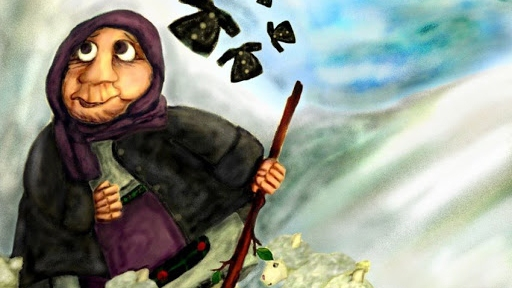
While inspecting the young girl, Baba Dochia noticed the red flower pinned to her blouse and, believing that spring had come, hurried to take her sheep up the mountains.
She dressed herself in twelve coats, but, as she climbed the chilly mountains, the weather started getting warmer and warmer with each day, and so, with each day, she took one coat off, until she remained in only a blouse. As if on que, the following day a freezing storm came with the last push of winter, and Baba Dochia, as well as her sheep, froze on the mountains and turned into stone by the next day.