Ania Z, a 10a B
The Lost: An anomaly in the DNA stops the aging of said person. Activates when they turn 18.
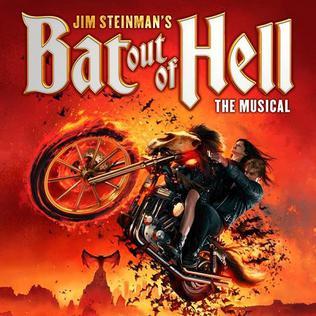
“Like a bat out of hell I’ll be gone when the morning comes” […] “But when the day is done … then like a sinner before the gates of heaven I’ll come crawling back to you.” The musical, featuring songs by Meatloaf (ex. “I would do anything for love”), captures the attention of the masses with a Romeo and Juliet type romance between the daughter of a very influential corporate manager and the leader of The Lost. The hurried consumption of love between them (since their age will forbid anything more) gradually reveals the polarization of this almost dystopian society, along with different background stories of secondary characters which also add an emotional dimension to an otherwise philosophical debate. In this review I will focus on the themes and the discussion that follows the narrative, not on the story in itself.
The two polarized world views are well defined, although extremely exaggerated. The Lost are a play on the concept of rebellion, of immaturity and of youth. They exist beyond time (“Don’t worry about the future, sooner or later it’s the past”) which justifies the conditions of their living. A reoccurring idea is that they are wasted youth: potential with too much freedom, kids who live only for themselves and for pleasure (“I’m an impressionable child in a tumultuous world and they say I’m at a difficult stage”). This ideology that combines hedonism and cynicism is very excessive, and they end up living their whole lives as 18-year-olds who are completely segregated from reality (“As far as I’m concerned the world could still be flat.”). The other side is the corporatist, serious “old age”, who’s aim is to eradicate these kids who lack discipline and perspective. Even though this is an outlook that most of us have (this view of being intentional with our lives, especially our future, of existing between other people and transacting with them), it is portrayed as very dark and absurd. The thing that antagonizes this side to such an extent is their constant trying to eradicate the youth, of killing the Lost and discontinuing every form of pleasure that might make someone rebel (in this case, especially music).
It’s hard to assume that what was being said was that committing to a corporatist life will be a waste of your personal life, and it’s much more likely that the musical tries to show two things. The first is this fight inside every one of us of what our meaning of life is, and what our obligations to life are. The second is this great fear that youth deals with (of growing up), but in this scenario that fear is forever prolonged since they are physically incapable of growing up. They make it pretty clear that, to them, “A wasted youth is better by far than a wise and corrupted old age”. At the same time, the corporate side also shows their own fears in the interactions with the Lost. To them, the idea of people living all their life as kids, without having to sacrifice what they sacrificed, seems unfair and makes them wonder about their own lives too much. This fight is interesting because in real situations, adults can never go back to whatever youth was, but youth have no choice but to move forward towards adulthood. In this case though, both sides are stuck in their current state and there is no more room for empathy, which results in conflict, in people getting hurt and even killed.
The first album (“Bat out of hell I”) came out in 1977 and was meant for another musical, called Neverland. Through this, the resemblances between Peter Pan and Bat out of hell become more apparent. In both, the two sides are stuck in their world view. Again, in reality this is different, reality leaves room for compassion and understanding, because common points are highlighted, as opposed to these worlds, where there’s no similarities between the two sides. From this we can deduce that, at least in the authors point of view, for us to care enough not to antagonize other perspectives, we must have some link between us and them. The moment that disappears, “that” in this case being time, there is nothing stopping both sides from considering each other evil, corrupt, dangerous, etc. This is something that applies to modern problems as well. Especially in politics, a reoccurring theme is finding horrendous labels for the other side, even though reality is far from those beliefs. All this does is make it easier for one side to hate the other to the point of conflict, instead of working together towards merging ideas and finding solutions.
This just goes to show how much time matters, not just in the fact that we move through it, but because it dictates our priorities. A person who has a limited life spam (and who puts all their time and effort into reminding himself of this) will have to have more principles and a better morality, since limited time results in communities forming, and communities need common goals, common economies, common values, etc. When time isn’t a restraint anymore, what matters is inevitably the present, and the present doesn’t require principles, caring or anything that involves responsibility or that has an effect on the future. Therefore, the Lost and the Corporatists aren’t that different in themselves, but in the context of their living. Obviously the one’s who are going to be more bitter between the two are the Corporatists, who sacrifice so much of themselves because of time and who find it unfair that others don’t have to. The Lost also have their share of envies, mostly the fact that nothing in their life is of value and nothing they are is important to anyone but themselves.
It’s clear that in reality, nobody can live on either side of the argument, and it is only going to hurt you if you attempt to advocate for only one. The perspective we should get out of watching this is most likely that the two worlds overlap in each of us, and that finding the perfect balance where no resentment is built up between them is crucial to living a life you won’t end up regretting.