Category Archives: Genul: Științific

Cercetarea lumii obiective prin subiectivitatea noastră

The History of Surfing by Ilinca T.

..Surfing..

Ever wondered where this magnificent, weird and… dangerous sport was invented? Why? When? Me neither, but here’s it anyway: 

Firstly, surfing is one of the oldest practiced sports on the planet. The art of wave riding is a blend of total athleticism and the comprehension of the beauty and power of nature. Surfing is also one of the few sports that creates its own culture and lifestyle.

At first, surfing started in Western Polynesia, like riding a wooden board on the waves. The first surfers were fishermen who discovered it was an efficient method of getting to shore with their catch. Early historical records of surfing appear in the late 1700s, when Europeans and Polynesians made first contact in Tahiti. Navigator Captain James Cook described how a Tahitian caught waves with his outrigger canoe just for the fun of it: “On walking one day about Matavai Point, where our tents were erected, I saw a man paddling in a small canoe so quickly and looking about him with such eagerness of each side. He then sat motionless and was carried along at the same swift rate as the wave, till it landed him upon the beach. Then he started out, emptied his canoe, and went in search of another swell. I could not help concluding that this man felt the most supreme pleasure while he was driven on so fast and so smoothly by the sea.”

The Hawaiians who surfed, the ali’i or high class, claimed the highest reputation for skill with boards on waves. They developed their own prayers, board shapers, wood and beaches where a select few could surf with people of their talent. No one dared to drop in on their wave in fear of getting punished and possible dying. The surfboards underwent a sacred ritual before construction. Only three types of trees were picked to make a board. The board maker would dig up the tree and around the roots place fish in the hole as an offering to the gods for the tree. The process of shaping then began.

There were four basic board types used in ancient Hawaii:
– The paipo or kioe, a body board, from 2-to-4 feet long, usually used by children.
– The alaia (ah-LAI-ah) or omo (O-mo), a mid-sized board, about 8 feet or longer.
– The kiko`o, larger than the alaia, but not as big as the biggest boards; between 12 and 18 feet; good for bigger surf, but requiring a high level of skill to handle.
– The olo (O-lo), a very long surfboard reserved for royalty that could be as long as 18-to-24 feet in length

Inspiration here.
The Devil’s Tritone (Devil in Music)

Hellooooo fellow humans, it is I, Ania, here with a radar interesting article! Firstly, I hope you had an amazing Christmas along your loved ones, but on to today’s subject, which is the evil, monstrous Devil’s Tritone!

“Diabolus en muzica”, which means “the devil in music” in latin, is an interval spanning three full tones (Tri=three, Tone=Tones). It divides the octaves into two different equal parts, creating an unstable sound that, churches thought, would make the devil appear, if sung. In the Middle Age, it was banned, and anyone who sang it were sentenced to death.

Well…. That’s actually not true… It was not ever banned, as there’s no evidence of that, but the misleading information is repeated over and over again on the Internet.

The tritone was used in church songs (quite rarely), and the reason it was rarely used is because it was difficult to sing and dissonant, but could have been effectively used in certain contexts.

It was first heard of 400 years after the Medieval practice.

In the 18th century, Johann Fux described it in a textbook called “Gradus ad Parnassum”. The phrase said that “mi” against “fa” is the devils tritone… But the notes only form a minor 2nd… So, what’s up with that?

Well… The Medieval Music was split in 3 hexachords. A hexachord consists of the first six notes of the major scale.

The ‘natural‘ Hex. was built on “do“, the ‘soft‘ Hex. built on “fa“, and the ‘hard‘ Hex. built on “sol“.

Therefore, “mi” from the natural Hex. can create a tritone with “fa” from the soft Hex., “fa” from the natural Hex. can create a tritone with “mi” from the hard Hex., and “mi” from the hard Hex. was especially devilish with “fa” from the soft Hex.

The expression “devil’s tritone” is similar to “I after E, except after C”. It’s a practical technical rule, but not a warning against the devil.

Why do we believe it’s evil, then? It’s because of an amazing thing called “Semantic shift”, which means that words can change their meanings in time, often to negative one’s.

For example, “awful” (Really bad) meant “inspiring awe”, and that’s kind of what happened to the devil’s tritone.

19th century romantic composers studied it and took the phrase.. Quite literally… Therefore creating evil, powerful sounding music based on it. The evil of the phrase intensified in the 20th and 21st century, when metal bands started experimenting with it.

Even if it didn’t mean “evil” in the Middle Ages, the tritone has been socially codified to mean “evil” and to represent the devil.

I hope you enjoyed this pile of information thrown at you, and if you want to know more, check out this video.

Have a great day ^^

The Sumatran tiger

Ana Licu

clasa a V-a A

The Sumatran tiger is one of the most endangered species. This remarkable animal is at high risk of extinction because of poaching and severe deforestation in Sumatra.

Can you imagine that in your child’s life time the Sumatran tiger could disappear? The number of Sumatran tigers is degreasing and the forests in Sumatra are getting smaller every day. The number of Sumatran tigers now existing in the forest is between 250-400 tigers left in the forests of Sumatra. In 20-30 years the Sumatra forest will disappear and all the wildlife existing there will suffer dramatically changes. The future of the Sumatran tiger spices doesn’t look so bright.

Please help save the Sumatran tigers and create a better tomorrow for nature!

I hope that you enjoyed this article. See you next time!!

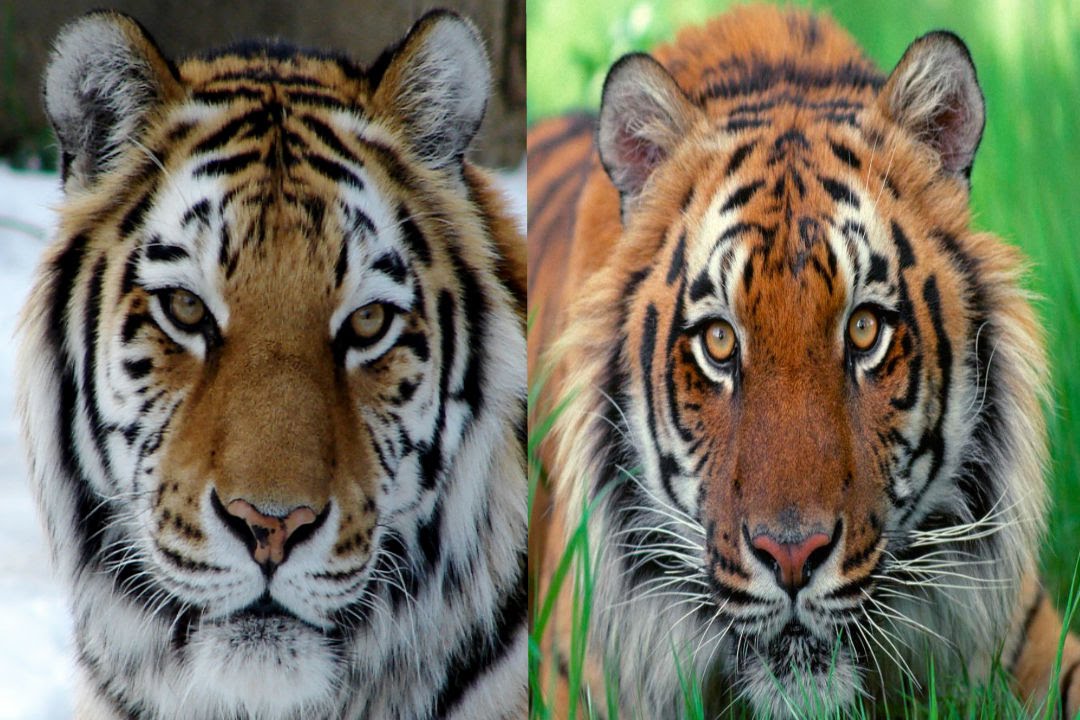
Siberian Tiger & Sumatran Tiger


The Memory of Water ?

Information about water and its peculiarity were studied by a chines author and researcher Masaru Emoto.He claimed that human consciousness has an effect on the molecular structure of water. His early work explored his belief that water could react to positive thoughts and words, and that polluted water could be cleaned through prayer and positive visualization.

Since 1999, Emoto published several volumes of a work entitled Messages from Water, which contain photographs of ice crystals and their accompanying experiments. Emoto’s ideas appeared in the movie What the Bleep Do We Know!?Masaru Emoto.jpg

Emoto claimed that different water sources would produce different crystalline structures when frozen. For example, he claimed that a water sample from a mountain stream when frozen would show structures of beautifully-shaped geometric design, but those structures would be distorted and randomly formed if the sample were taken from a polluted water source. Emoto believed that these changes could be eliminated by exposing water to ultraviolet light or certain electromagnetic waves.

Commentators have criticized Emoto for insufficient experimental controls and for not sharing enough details of his approach with the scientific community.William A. Tiller, another researcher featured in the documentary What The Bleep Do We Know?, states that Emoto’s experiments fall short of proof, since they do not control for other factors in the supercooling of water.In addition, Emoto has been criticized for designing his experiments in ways that leave them prone to manipulation or human error influencing the findings.

Emoto’s book The Hidden Messages in Water was a New York Times best seller.[25][26] Commenting on the book making the list, literary critic Dwight Garner wrote in The New York Times Book Review that it was one of those “head-scratchers” that made him question the sanity of the reading public, describing the book as “spectacularly eccentric.”[26] Publishers Weekly described Emoto’s later work The Shape of Love as “mostly incoherent and unsatisfying”.

Dirty electricity

Dirty electricity consists in magnetic and electrical fields and also radio frequency radiation with  high frequency which is beyond normal limits and can considerably affect our health. There are some ways in which you can protect ourselves from harmful electrical fields such as not using  heating pads and switch off circuit breaker at night. You can also use some tips to protect your home from magnetic fields like using battery alarm clocks instead of the ones that you plug in an outlet or positioning your bed a few feet away from the wall thats next to a room like the kitchen. When it comes to radio frequency radiation, you should try not to use wifi, turning your phone off at night and not using it in the car or in public transport.


The microworld

We have a ” did you know” rubric about Tardigrades (water-bears):

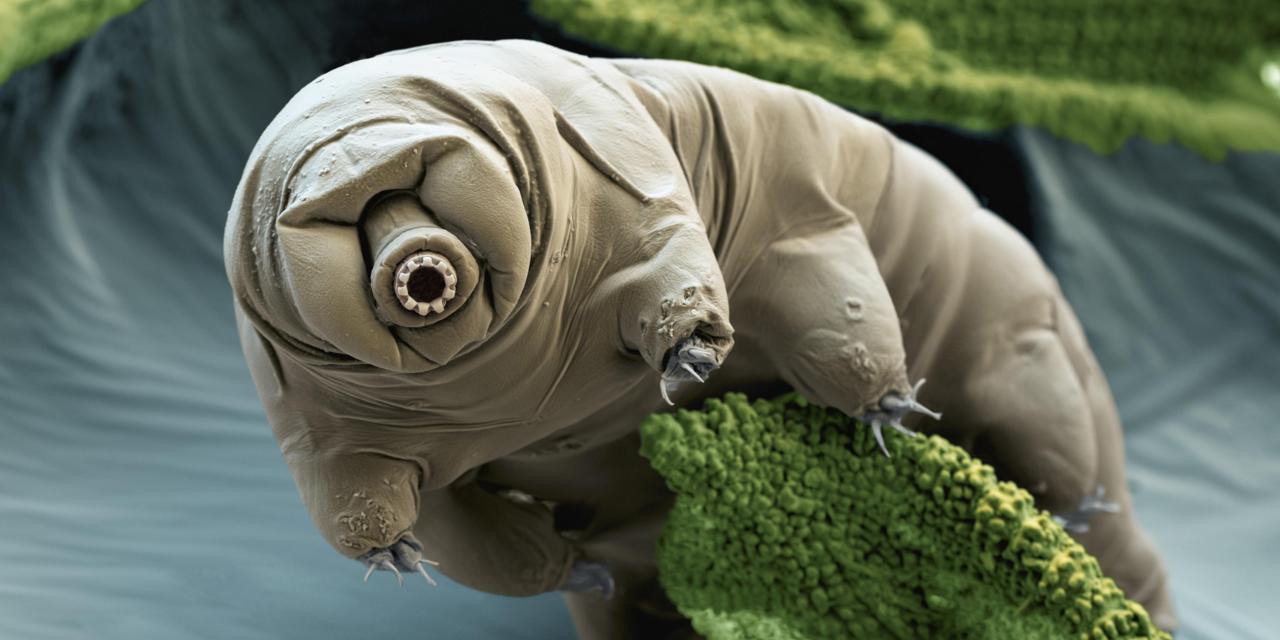
Water bear. Coloured scanning electron micrograph (SEM) of a water bear (Paramacrobiotus craterlaki) in moss. Water bears (or tardigrades) are tiny invertebrates that live in aquatic and semi-aquatic habitats such as lichen and damp moss. Paramacrobiotus craterlaki is a carnivorous species that feeds on nematodes and rotifers. Water bears are found throughout the world, including regions of extreme temperature, such as hot springs, and extreme pressure, such as deep underwater. They can also survive the high levels of radiation and vacuum of space. Magnification: x330 when printed at 10 centimetres wide.
Water bears (or tardigrades) are tiny invertebrates that live in aquatic and semi-aquatic habitats such as lichen and damp moss.  Water bears are found throughout the world, including regions of extreme temperature, such as hot springs, and extreme pressure, such as deep underwater. They can also survive the high levels of radiation and vacuum of space. Magnification: x330 when printed at 10 centimetres wide.

I liked  biologist Joe Hanson’s humour which inspired me to write this article and quote him:

“Eat Your Tardigrades or You Don’t Get Dessert!” 

You’ve probably eaten them. It looks such as these creatures (0.5 mm long) “live not only on wild mosses and wet plants, but on grocery store produce like lettuce and spinach.” Do you think that a rinse or shake under the water (or even cooking) is enough to dislodge a “radiation-eating” creature? It might be.

Don’t worry if you’ve eaten them, though. It seems they’re  harmless. They don’t resist the stomach acid.

You can  imagine that ” when you eat them, you absorb their power, and become a little bit mightier.”

So….. “For strength, eat your vegetables and eat your tardigrades!”

Just food for thought or..for dreaming:

Perhaps in order for people to colonize other planets , it will be useful to dig into the study of this kind of creatures which are able to convert radiation into food!!

What do you think about it? Interesting enough? if yes, write  about other microorganisms – relatives of tardigrades or not –  and explain shortly the Physics involved here.

Please, don’t stop eating vegetables! Just wash them well!